- Posted July 31, 2026
Nicotine Levels Are Rising Among Teens Who Vape, New Study Warns
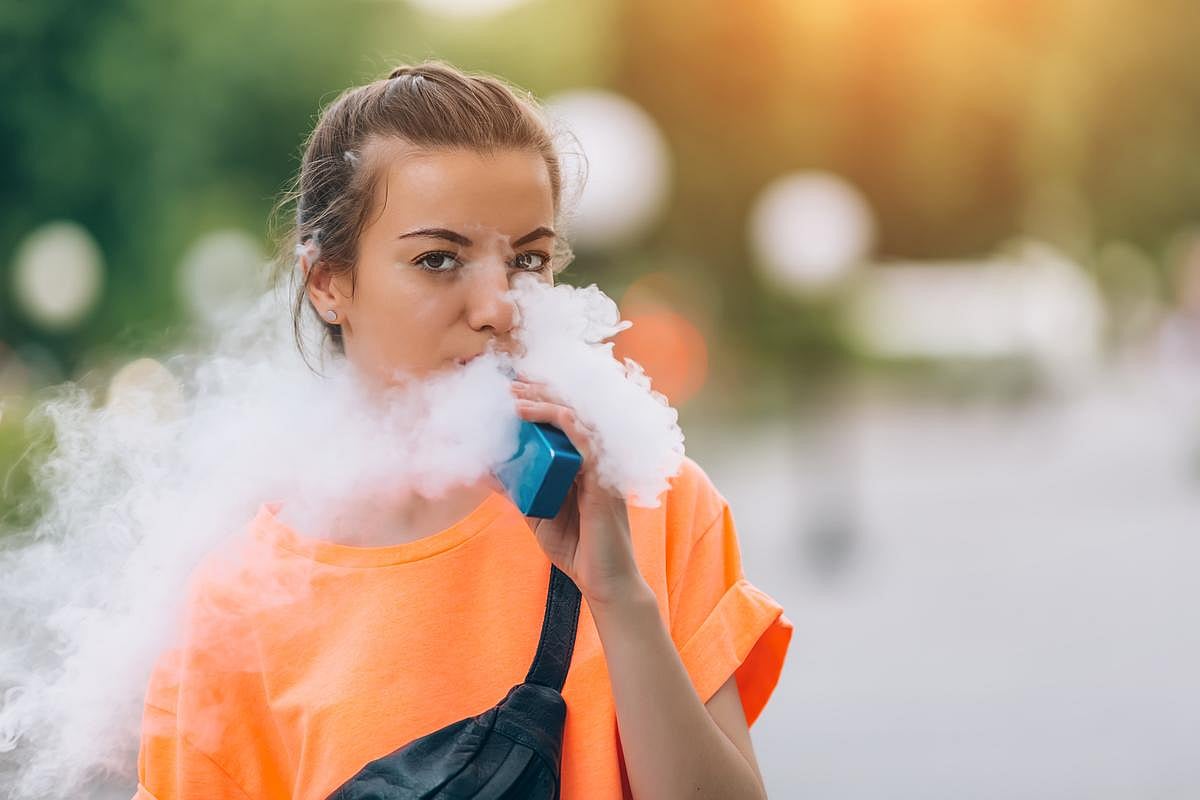
Vape devices are flooding teens’ bodies with increasingly heavy doses of addictive nicotine, a new study finds.
Average urine levels of a key nicotine metabolite, cotinine, nearly tripled among teenagers over a period of a few months in late 2024, researchers reported July 29 in JAMA Psychiatry.
Teens’ cotinine levels appeared to rise along with the evolution of e-cigarettes. As the researchers explained, newer pod-based vape devices carry higher concentration nicotine salts, while disposable devices feature larger-capacity tanks.
“This finding suggests new exposures among this population to products with higher nicotine concentrations or additives that make nicotine more bioavailable or engender greater use or deeper inhalation,” concluded the research team led by Dr. Sharon Levy, chief of addiction medicine with Boston Children’s Hospital.
Nicotine is a highly addictive chemical compound found in tobacco, according to the U.S. Food and Drug Administration. It’s the reason smoking is addictive, and holds the same addictive properties when found in other types of products.
For the new study, researchers analyzed the health records of more than 150 patients ages 13 to 19. All were treated at Boston Children’s for substance use disorder between 2023 and 2025, including more than 1,900 urine test results for the teens.
Results showed that average maximum cotinine concentration in the teens’ urine rose over time: From nearly 1,062 nanograms per milliliter (ng/mL) prior to October 2024, to more than 2,959 ng/mL going into 2025.
All teens with high cotinine levels used e-cigarettes, researchers found.
“There's a sharp abrupt increase identified in the second part of the period they examined, specifically after October 2024 — nearly a three-fold increase — which made the researchers and investigators look into this high amount of nicotine our kids are exposed to,” said Dr. Manassa Hany, in a news release.
Medical experts are concerned about the long-term effects that these high levels of nicotine could have on the maturing brains of teenagers, said Hany, who was not involved in the study. He directs addiction psychiatry at Northwell Health’s Zucker Hillside and South Oaks hospitals in New York City.
“It's not like you ate bad food, you get a stomach bug, and you start to have GI symptoms right away,” Hany said. “It’s likely the effect and the impact of that psychoactive substance nicotine in that high dose will manifest in the next 10 years, and you have so many contributing factors and confounding factors that you forget the reason you’re feeling poorly.”
“We're talking about an age that's young, where the brain is not yet fully developed with the full ability to reason,” Hany added. “That's where you get so concerned about what is going to happen in the future."
Regulators could help by placing limits on nicotine levels in vapes, and by limiting the use of agents and technologies that make vaping smoother, Hany said.
“First of all, the dose of nicotine is really high in the product, then the delivery system might promote that even higher,” Hany said. “There are also certain cooling agents that will remove the negative taste of the high level of nicotine.
“Think of it as very bitter coffee that in order for you to consume a very concentrated caffeine product, you add some milk and sugar,” Hany said. “It's more or less the same way when you're delivering a high concentration of nicotine that the cooling agent will make it more palatable for those who are going to use it. So, all of these methods will promote immediate use of the substance.”
More information
The U.S. Food and Drug Administration has more on the addictive nature of nicotine.
SOURCES: JAMA Psychiatry, news release, July 29, 2026; Dr. Manassa Hany, director of addiction psychiatry at Northwell Health’s Zucker Hillside and South Oaks hospitals in New York City; JAMA Psychiatry, July 29, 2026
