- Posted January 13, 2026
New Barbie With Autism Aims To Help Kids Feel Seen and Included
For many children, toys are more than playthings, they’re a way to feel understood.
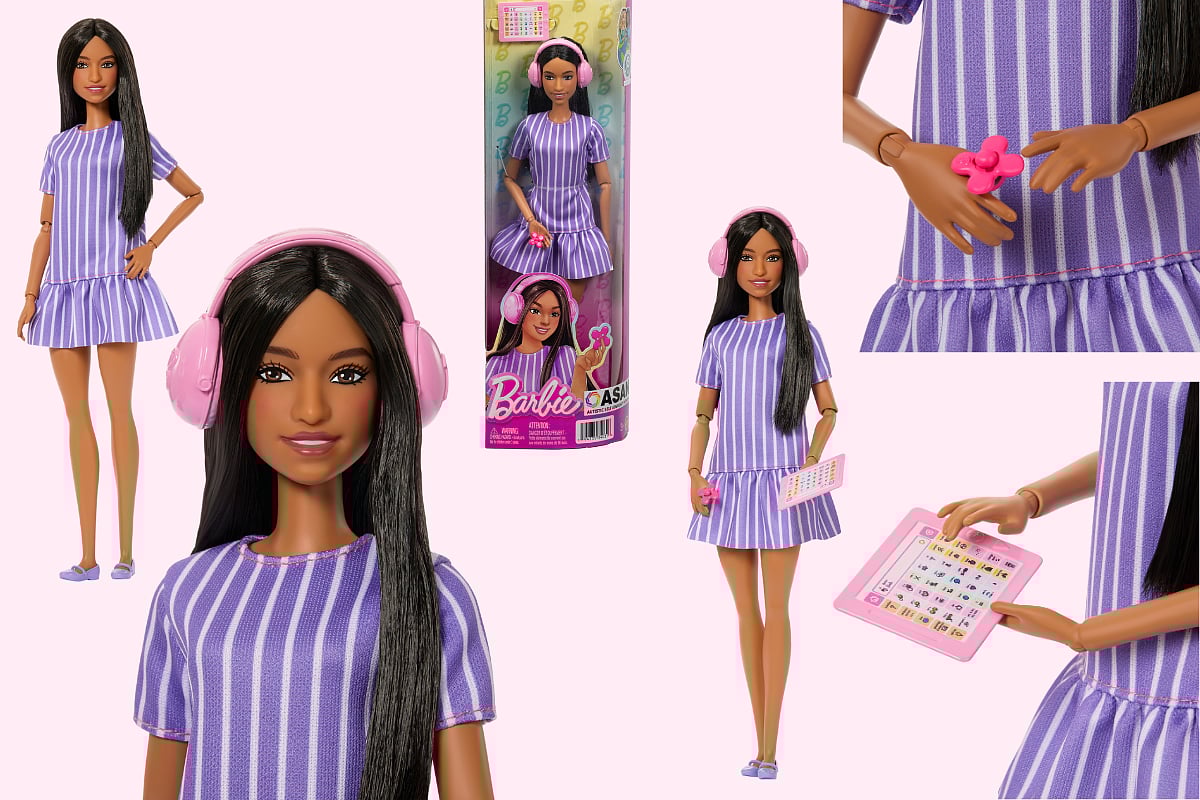
That’s the idea behind a new Barbie released this week, designed to reflect the experiences of people with autism.
The doll, introduced Monday by Mattel, is the first Barbie created to represent autism. It includes accessories and design details meant to reflect how some people with autism communicate, manage sensory overload and navigate the world.
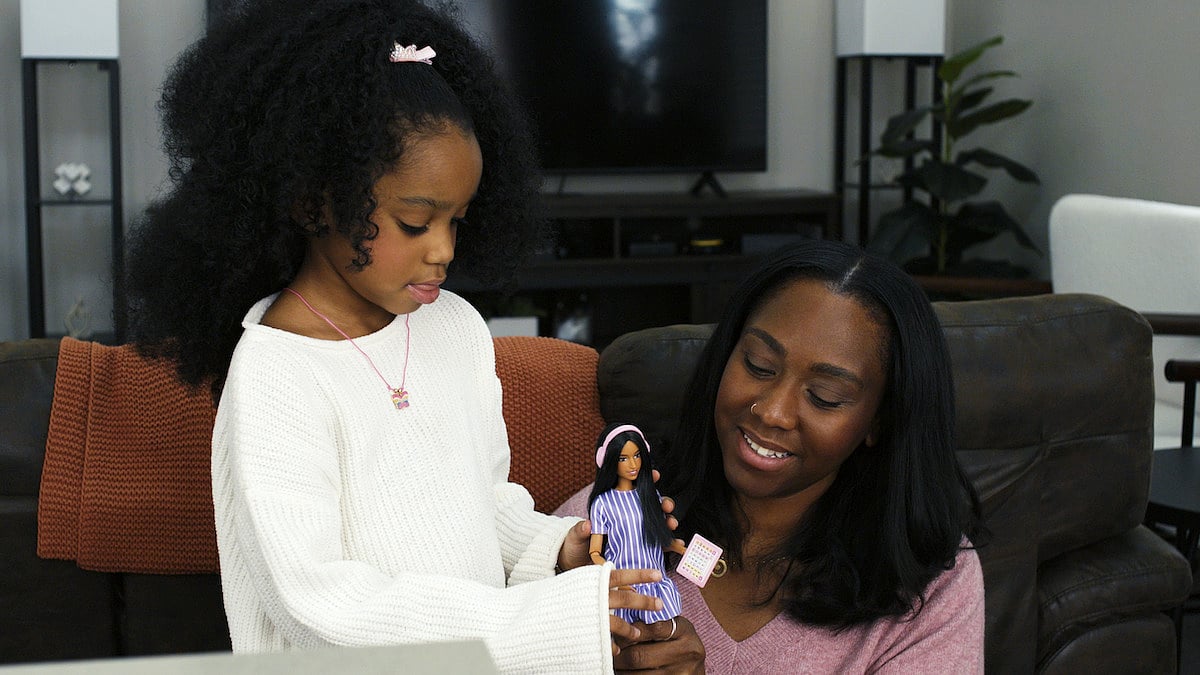
Five-year-old Mikko noticed right away that her new Barbie looked a lot like her. The doll wears oversized, noise-canceling headphones and carries a fidget spinner, tools Mikko also uses.
“Autism is such an invisible disability at times, and to see that it’s being represented through Barbie -- everybody knows who Barbie is -- it felt really good,” Mikko’s mother, Precious Hill, who lives in Las Vegas, told CNN.
Mikko is nonverbal and uses an augmentative and alternative communication device, often called an AAC device, to communicate. The doll includes a pink tablet meant to represent that tool.
"It’s really important to me that Mikko walks through life having representation. It really matters to me that she’s not alone," Hill said.
The new Barbie also has eyes that look slightly to the side, a detail meant to reflect how some people with autism avoid direct eye contact.
Her purple dress is loose and soft, recognizing that certain fabrics can be uncomfortable for people with sensory sensitivities.
Hill, who also has autism, told CNN the doll made her feel seen as well. She has two older children, including a son with autism, who also reacted positively to the new Barbie.
Mattel worked with the nonprofit Autistic Self Advocacy Network to help guide the doll’s design. About 1 in 31 children in the U.S. is diagnosed with autism by age 8, according to U.S. Centers for Disease Control and Prevention (CDC) data.
“It is so important for young autistic people to see authentic, joyful representations of themselves, and that’s exactly what this doll is,” Colin Killick, executive director of the network, told CNN.
The doll joins Mattel’s Fashionistas line, which already included Barbies representing a wide range of body types, skin tones and health conditions such as blindness, Down syndrome and type 1 diabetes.
Autism affects how people communicate, interact and experience their surroundings. While it usually appears in early childhood and lasts a lifetime, early support can improve daily life.
Although autism is diagnosed more often in boys, experts say it is often missed in girls. Many women don’t learn they have autism until adulthood, sometimes after their own children are diagnosed.
Hill said that was her experience. She learned she had autism at age 29, after her daughter’s diagnosis.
Eileen Lamb, a mother of three and senior director at the advocacy organization Autism Speaks, said autism looks different in everyone.
“I don’t think it’s possible to represent the entire spectrum in one doll. For instance, my son Charlie uses an AAC device also to communicate. He’s fully nonverbal. So I love that the Barbie has an AAC device. But my other son, who’s also on the spectrum, does not. So again, it’s not possible to represent everyone, but it’s a great step,” Lamb said.
Experts say toys play an important role in how children understand themselves and others.
"Toys matter. Representation matters, and it’s really good for children to see themselves in a toy,” Lamb said. “It sends a message that being different is nothing to be ashamed of."
More information
Mattel has more on the new Barbie with autism.
SOURCE: CNN, Jan. 12, 2026
