Get Healthy!
- Posted February 9, 2026
Therapy Dogs Ease Loneliness Among People Hospitalized For Mental Illness
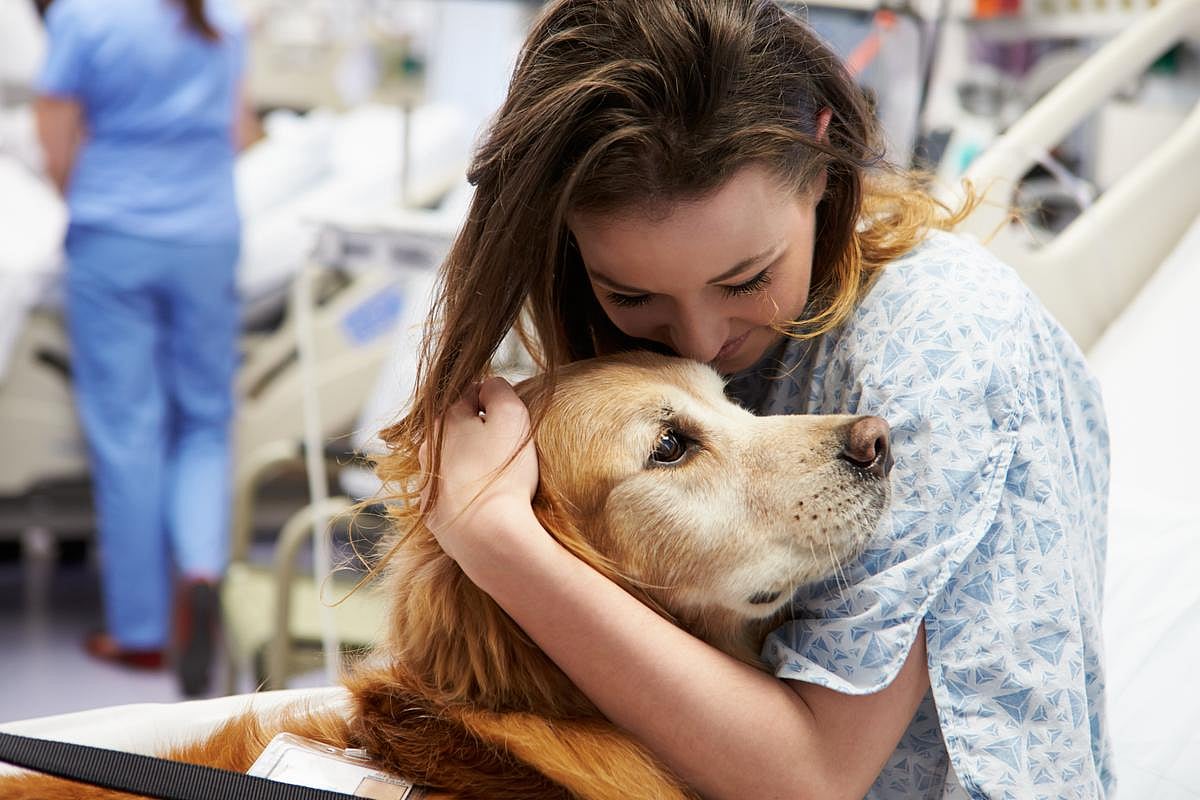
Regular visits by a therapy dog can aid the healing of people hospitalized for treatment of mental disorders, a new study says.
Therapy dogs eased the loneliness and isolation of patients in a hospital for psychiatric care, helping their treatment, researchers recently reported in the journal Frontiers in Psychiatry.
“To our knowledge, this is the first study of its kind to examine how dogs impact loneliness in people hospitalized for the treatment of acute mental illness,” said lead researcher Nancy Gee, director of Virginia Commonwealth University’s (VCU) Center for Human-Animal Interaction.
“Our findings show that there is something unique about the presence of a therapy dog that provides immediate improvement in loneliness, above and beyond that of human interactions or the standard of care,” she said in a news release.
Lengthy stays in a hospital can be an isolating experience, potentially harming patients’ health, researchers said in background notes.
Loneliness is strongly linked to increased risk of heart disease, dementia, stroke, depression, anxiety and premature death, researchers said. It’s also known to contribute to suicidal thoughts and relapses in substance use.
“Loneliness poses health risks that are as deadly as smoking 15 cigarettes a day,” Gee said. “Older adults and people with mental health conditions are some of groups most vulnerable to the deleterious effects of loneliness, particularly those who are hospitalized.”
In the pilot study, 60 patients receiving treatment for acute mental illness at VCU Health were randomly assigned to one of three groups:
One group got a visit from a canine and handler serving with Dogs on Call, a therapy dog program offered by VCU’s Center for Human-Animal Interaction.
The second got a visit from a dog’s handler, but not the pooch itself.
The third received care as usual.
Visits from dogs or handlers took place 20 minutes a day for three days. Patients also completed mental health and loneliness assessments before and after the visits.
Results showed that participants visited by therapy dogs had the biggest reductions in loneliness on average, although loneliness generally decreased in all three groups over time.
Prior research has shown that dogs help reduce stress levels in humans, Gee said, adding that dogs tend to be natural “icebreakers” in social settings.
These encounters are also good for the dogs, Gee noted.
“In the Dogs on Call program, the dogs are our partners, and we know that they gain something from these interactions just as the humans do,” Gee said.
However, more research is needed to better understand exactly why therapy dogs combat loneliness in humans, researchers said.
More information
The American Kennel Club has more on therapy dogs.
SOURCE: Virginia Commonwealth University, news release, Feb. 5, 2026
